

What Is a Good FTP for Amateur Cyclists? A World Tour Coach Explains
FTP is the most talked-about number in cycling, and the most misunderstood. Here's what it actually means, what a realistic benchmark looks like for amateur riders, and how to move yours in the right direction.
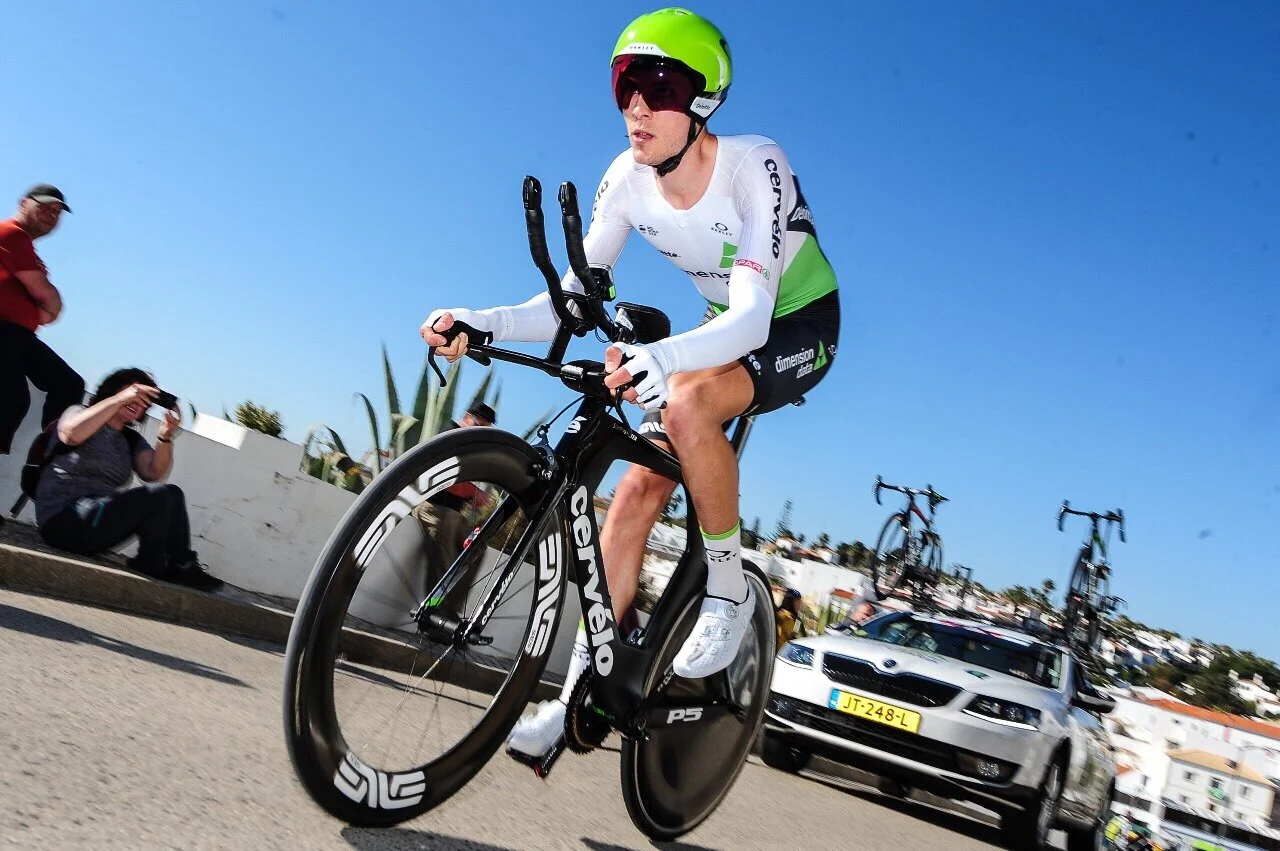
Every cyclist with a power meter eventually asks the same question: is my FTP good? The number haunts group ride conversations, fills comment sections on Reddit, and gets thrown around at coffee stops like a handicap in golf.
The honest answer is: it depends, but there are real benchmarks worth knowing, and understanding them properly will change how you train.
I raced professionally for eight years, including four Grand Tours with Team Dimension Data. I've trained alongside riders with FTPs north of 400 watts and ridden with club cyclists who can barely crack 200. I now coach athletes from masters racers to aspiring cat 1s from my base in Boulder, Colorado.
Here's what I actually know about FTP, and what the number is (and isn't) telling you.
What Is FTP, Actually?
FTP stands for Functional Threshold Power, the maximum average power you can sustain for approximately one hour. It's expressed in watts and, more usefully, in watts per kilogram (W/kg) to account for body weight.
The concept was developed by Dr. Andrew Coggan and has become the foundation of power-based training. Your FTP determines your training zones essentially; it calibrates every workout you do. Get the number wrong, and your entire training structure is built on a faulty foundation.
Important distinction: FTP is a functional field test number, not a lab VO2max. It can be measured, improved, and tracked without expensive equipment, just a power meter, a bike, and some honest suffering.
FTP Benchmarks: What's Good for an Amateur Cyclist?
The most useful way to think about FTP is in watts per kilogram (W/kg). This normalises the number across different body weights and lets you fairly compare rider types.
Here's a realistic benchmark table for male amateur cyclists:

For female riders, subtract roughly 0.3–0.4 W/kg from each category; the physiological gap is real, but the training principles are identical.

The number that actually matters:
Not your raw FTP, but your rate of improvement. An athlete who goes from 2.8 to 3.4 W/kg in a season has done something exceptional, regardless of where they started.
How to Test Your FTP Properly
There are three main protocols in common use. Each has tradeoffs
The 20-Minute Test (Most Common)
Ride as hard as you can for 20 minutes, then use 95% of your average power as your FTP. The 5% reduction accounts for the fact that 20 minutes is shorter than an hour.
The catch: most amateur athletes go out too hard and fade badly in the final 5 minutes, tanking the result. You need genuine pacing discipline, not heroics.
The Ramp Test (Zwift / TrainerRoad Default)
Progressively increase 1-minute steps until you can no longer hold power. Your FTP is calculated as approximately 75% of your best 1-minute power.
The catch: tends to overestimate FTP for riders with high anaerobic capacity (strong sprinters), and underestimate for diesel engines with high TTE. Know which rider you are.
The 8-Minute Test (Two Efforts)
Two 8-minute all-out efforts with 10 minutes recovery between them. Take 90% of the average power from both efforts.
Best for: riders who struggle to pace a 20-minute effort and consistently produce better numbers in shorter, higher-intensity blocks.

Coach's note:
I use the 20-minute test with the athletes I coach, but I spend significant time teaching pacing before we use the number. A poorly executed FTP test is worse than no test at all; it miscalibrates every training zone that follows it.
The FTP Mistake Most Amateur Cyclists Make
The single most common error I see in amateur training files is chasing FTP at the expense of TTE; Time to Exhaustion at threshold.
FTP tells you how high your ceiling is. TTE tells you how long you can touch that ceiling before you fall off. A rider with a 280W FTP and a 50-minute TTE will beat a rider with a 300W FTP and a 25-minute TTE in almost every road race and gravel event that matters.
Most structured training programs focus heavily on raising FTP because it's the number people talk about. Far fewer address TTE systematically, and that's where I find the most untapped improvement in the athletes I coach.
The fix: once your FTP is at a reasonable level for your category, shift the focus to extending how long you can hold it. Longer sweet spot intervals, progressive threshold blocks, controlled over-unders.
How to Actually Improve Your FTP
The broad strokes of FTP improvement are well established. The execution is where most self-coached athletes fall short.
Base volume matters. Build your aerobic base first.
Trying to raise FTP without an adequate base volume is like building a skyscraper on a weak foundation. Most amateur cyclists are chronically under-dosed on easy aerobic riding and chronically over-dosed on medium-hard riding; the zone that's too hard to be truly restorative and too easy to drive real adaptation.
The primary driver: Target sweet spot and threshold intervals.
Sustained efforts at 88–105% of FTP; sweet spot through threshold are the most time-efficient way to drive FTP improvements for time-crunched athletes. A weekly diet of 2–3 quality threshold sessions within a polarized framework is a reliable formula.
The accelerant: Add VO2max work once your threshold is solid.
Short, high-intensity VO2max intervals (4–8 minute blocks at 106–120% FTP) provide a powerful stimulus when layered on top of a developed threshold. Don't add this layer too early; it's high-stress and needs recovery capacity that only comes from a trained aerobic system.
Recovery is training: Manage fatigue as carefully as you manage load.
The adaptation happens in the recovery, not the interval. Most athletes I work with initially need less training volume, not more; just higher quality, better structured, and properly recovered.
How Much Can You Actually Improve FTP?
This is the question everyone asks, and nobody wants to give an honest answer to.
With structured coaching, consistently applied across a full training season (typically 6–9 months), I routinely see:
Cat 4–5 athletes: 15–25% FTP improvement in a first structured year
Cat 3 athletes: 8–15% with specific threshold and TTE work
Cat 1–2 athletes: 3–7%, margins shrink as you approach your ceiling
Masters athletes: Often 10–18% in the first coached year, particularly if they've been training without structure
The biggest jumps come from athletes who were training hard but training wrong; lots of moderate-intensity riding, no real easy days, no true hard days. Introducing structure to that kind of training history produces dramatic results quickly.
The Bottom Line
A "good" FTP for an amateur cyclist is higher than it was six months ago, tested accurately, and trained against intelligently.
The benchmark tables are useful for context, not worth obsessing over. The rider who finishes every season measurably fitter than they started, without burning out or getting injured, is doing it right, regardless of where the number sits in the table.
If you want to know where your FTP sits relative to your goals, and more importantly, what's actually limiting your performance, that's exactly the kind of conversation I have in a free 30-minute call with every athlete I consider coaching.
Work with a World Tour coach.
I coach masters athletes, cat racers, and gravel riders from my base in Boulder, Colorado. If you want to understand exactly what's limiting your performance and build a plan to fix it, book a free 30-minute call. No commitment, no sales pitch; just a coaching conversation.